Air Purifier for Bedroom Comparison Made Simple
A bedroom air purifier earns its place when it improves the part of your home designed for rest – without becoming one more glowing, humming device competing for your attention. This air purifier for bedroom comparison focuses on the details that matter after the lights go down: quiet operation, the right coverage, credible filtration, and a design you will be happy to keep beside your bed.
The best choice is rarely the largest machine or the model with the longest feature list. It is the purifier that fits your room, your sensitivities, and your standard for a polished, comfortable sleep space.
Air Purifier for Bedroom Comparison: Start With Room Size
Coverage claims can make two purifiers look interchangeable when they are not. A compact unit may be ideal for a guest room or apartment bedroom, while a larger model can refresh air more confidently in a spacious primary suite. The key is to compare the purifier’s recommended room size with your actual bedroom, rather than buying based on a broad maximum-coverage number.
Measure the floor area first. Multiply the room’s length by width, then consider ceiling height. A 12-by-14-foot bedroom has 168 square feet, but vaulted ceilings add more air volume for the purifier to handle. If you keep doors open at night, factor in the adjoining hallway or bathroom as well. Your purifier is no longer treating one contained room.
For a bedroom, it is generally smarter to choose a model rated somewhat above your square footage. That extra capacity means it can operate at a lower, quieter speed while still circulating air effectively. A unit that only meets the room’s maximum size may need its highest setting, which is less appealing when you are trying to sleep.
CADR Is More Useful Than a Dramatic Coverage Claim
Clean Air Delivery Rate, or CADR, indicates how quickly a purifier can reduce certain airborne particles in a controlled setting. Higher numbers typically mean faster cleaning power, but they should be read alongside the room size and noise level. A powerful purifier is excellent for pollen-heavy seasons, pet dander, or an urban bedroom near traffic. It can be excessive for a small room if its lowest setting remains audible.
If brands use very different room-size testing methods, CADR offers a more comparable reference point. Still, no specification replaces thoughtful placement and regular filter care.
Compare Filters by What You Want to Remove
A refined bedroom should feel fresh, not perfumed with heavy sprays or overwhelmed by a device that promises everything. Filtration is where the practical differences appear.
A particle filter, often labeled True HEPA, is designed to capture fine airborne particles such as dust, pollen, smoke particles, and pet dander. This is the core feature to prioritize for most bedrooms, especially if seasonal allergies, pets, or city dust make sleep less comfortable. Be cautious with vague phrases like “HEPA-type” or “HEPA-style,” which do not necessarily meet the same performance standard.
An activated-carbon layer addresses odors and some gaseous compounds. It is particularly worthwhile for bedrooms shared with pets, spaces near a kitchen, or rooms exposed to outdoor smoke and traffic odors. Thickness matters here. A thin carbon sheet can help with light odors, but it will not perform like a substantial carbon filter.
A pre-filter captures larger debris such as lint, hair, and visible dust before it reaches the main filter. Washable or vacuum-friendly pre-filters can extend the life of the more expensive filter inside. For homes with shedding pets, this modest feature becomes a meaningful convenience.
Some purifiers add UV lights, ionizers, or other technology. These extras are not automatically a reason to pay more. For a sleep-focused purchase, dependable mechanical filtration and a quiet fan are often the more elegant choice. If a unit has an ionizer, look for an option to switch it off and avoid models that intentionally generate ozone.
Quiet Performance Is a Luxury, Not a Bonus
The purifier that looks beautiful in the morning but disrupts sleep at night is not the right bedroom model. Compare sound ratings in decibels, but remember that the quality of a sound matters as much as the number. A soft, steady fan can fade into the background. A high-pitched whine, rattle, or frequent motor adjustment can feel intrusive even at a low reading.
Sleep mode should lower fan speed, dim display lights, and prevent abrupt changes. However, there is a trade-off: the quietest mode also cleans more slowly. A smart routine is to run the purifier at a medium or higher speed for an hour before bed, then switch to sleep mode overnight. This gives the room a stronger initial refresh without asking you to sleep beside a louder fan.
For light sleepers, look beyond marketing language such as “whisper quiet.” Read the stated decibel range and favor models with multiple manually selectable speeds. Auto mode is convenient, but it can unexpectedly increase fan speed when the sensor detects particles. Some people appreciate that responsiveness; others prefer a consistent overnight setting.
Design and Placement Change the Experience
A bedroom purifier is part of the room’s visual landscape. Clean lines, a restrained control panel, and a finish that complements your furniture can make an everyday wellness appliance feel intentional rather than utilitarian. At Market Maestros, the appeal of a well-chosen home essential is not just what it does, but how naturally it elevates the space around it.
Choose a unit with accessible air intake and outlet vents. If the intake is placed against a wall, tucked behind a nightstand, or crowded by curtains, airflow drops. Give the purifier several inches of clearance on all sides. A spot near the bed is useful, but do not place the exhaust directly toward your face if moving air bothers you at night.
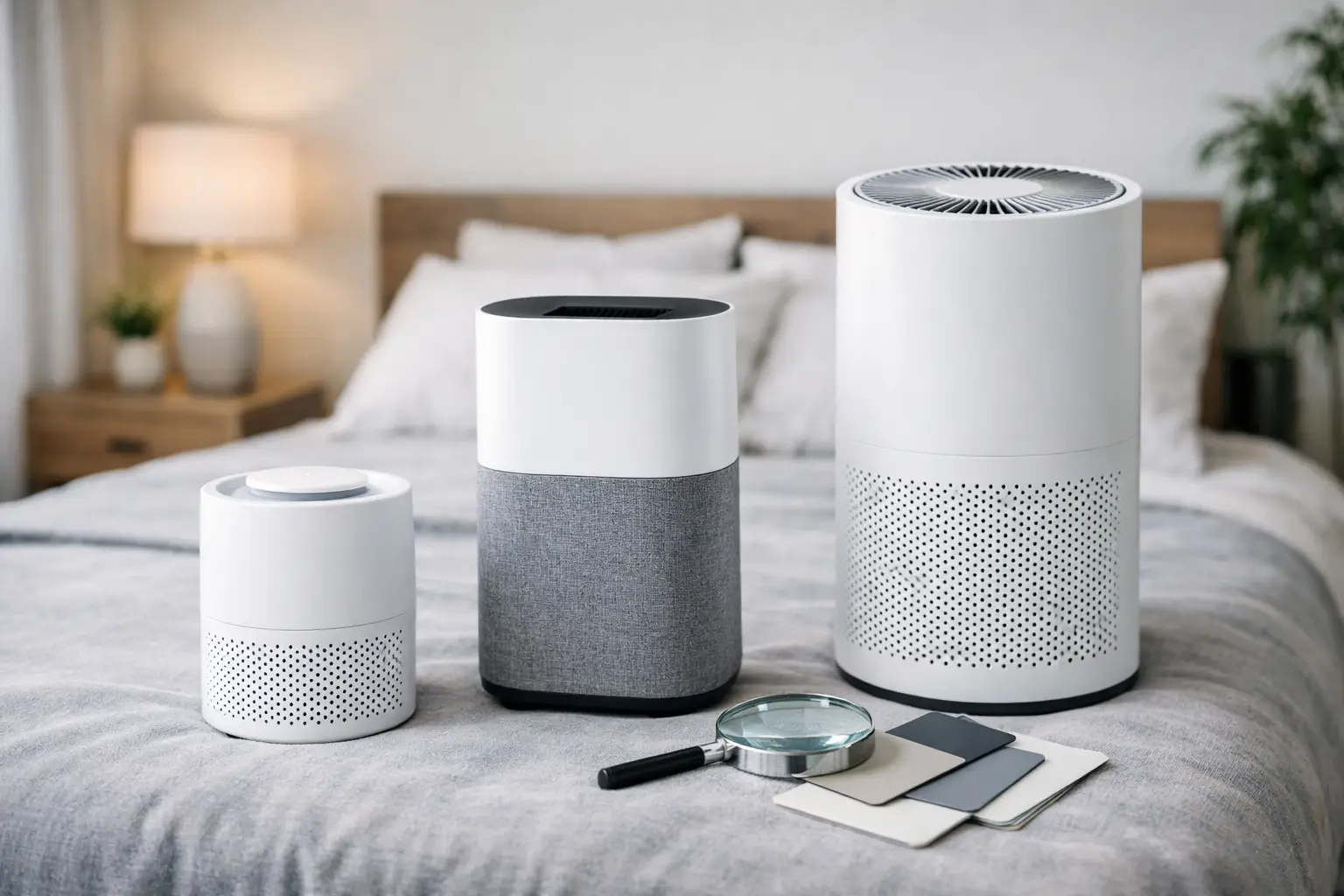
Smaller tabletop models preserve floor space and can suit compact bedrooms, yet they may require more frequent use at higher speeds. Floor-standing units often move more air and hold larger filters, making them a strong fit for primary bedrooms. The best visual choice depends on whether you want the purifier to disappear into the room or function as a sleek, modern accent.
Ongoing Costs Separate a Good Deal From a Good Buy
The purchase price is only part of the comparison. Every purifier eventually needs replacement filters, and those costs can vary widely. Before choosing, check how often filters need changing under normal use, whether replacements are readily available, and whether a multi-stage cartridge requires you to replace all layers at once.
A lower-priced purifier with costly, hard-to-find filters can become less appealing than a premium-looking model with straightforward annual maintenance. In homes with pets, smoke exposure, or high pollen levels, filters may need replacement sooner than the package estimate. Filter indicators are helpful reminders, but they are estimates, not a substitute for checking the filter’s condition.
Energy use also deserves a quick look. Bedroom purifiers often run for many hours, so an efficient motor and useful timer settings can reduce unnecessary electricity use. Smart controls can help if you enjoy scheduling, but app connectivity is optional. A physical button that reliably starts sleep mode may be all you need.
Which Bedroom Purifier Style Fits Your Routine?
Choose a compact, quiet model if your bedroom is small, you mainly want help with everyday dust and pollen, and visual subtlety matters most. Look for a True HEPA filter, a dimmable display, and enough capacity to run gently rather than constantly at full power.
Choose a larger, higher-CADR purifier if you have a generous primary bedroom, pets that sleep in the room, recurring smoke exposure, or frequent allergy concerns. Expect a larger footprint, but you gain the ability to clean air faster and operate quietly once the room has been refreshed.
Choose a purifier with substantial activated carbon if odors are as noticeable as particles. This is often the better direction for pet bedrooms, apartments, or homes where the bedroom is close to cooking areas. Just remember that carbon needs replacing too, and no purifier can fully compensate for an ongoing odor source.
A More Restful Room Begins With the Right Fit
A bedroom purifier is most successful when you barely notice it: the display is dark, the fan is gentle, and the room feels composed by morning. Select for real room capacity and quiet low-speed performance first, then choose the filter setup and finish that make it an easy part of your nightly routine. A cleaner, calmer bedroom is not about adding more technology to your space. It is about choosing one well-designed essential that lets comfort take the lead.








Leave a comment