How to Organize Kitchen Counters With Style
A beautiful kitchen can lose its polished appeal fast when the counter becomes a landing strip for mail, charging cords, grocery bags, and every appliance you own. Learning how to organize kitchen counters is less about creating an empty showroom and more about giving the things you genuinely use a purposeful, attractive place to live.
The most inviting kitchens feel edited, not under-equipped. A thoughtfully placed coffee station can feel luxurious. A sculptural fruit bowl can add warmth. The difference is that every visible item earns its place through daily function, visual appeal, or both.
How to Organize Kitchen Counters Without Losing Function
Start by clearing everything off the counter, including items that seem permanent. This gives you an honest view of the workspace, its proportions, and the clutter patterns that have quietly become routine. Wipe the surface clean, then resist the urge to put everything back immediately.
Instead, sort what was there into three groups: things used every day, things used a few times a week, and things that simply drifted into the kitchen. Only the first group automatically deserves counter space. The second group may belong in a nearby cabinet, pantry, or appliance garage, while the third needs a new home elsewhere.
This approach is especially helpful in compact kitchens, where even one oversized appliance can make the room feel crowded. In a large kitchen, the challenge is different: too many items spread across a long counter can make a premium space look unfinished rather than comfortably lived-in.
Build Zones Around Your Real Routine
The best countertop organization follows the way you move through the kitchen. Rather than arranging objects by category alone, create small zones that support the tasks you repeat every day.
Create a refined coffee or tea station
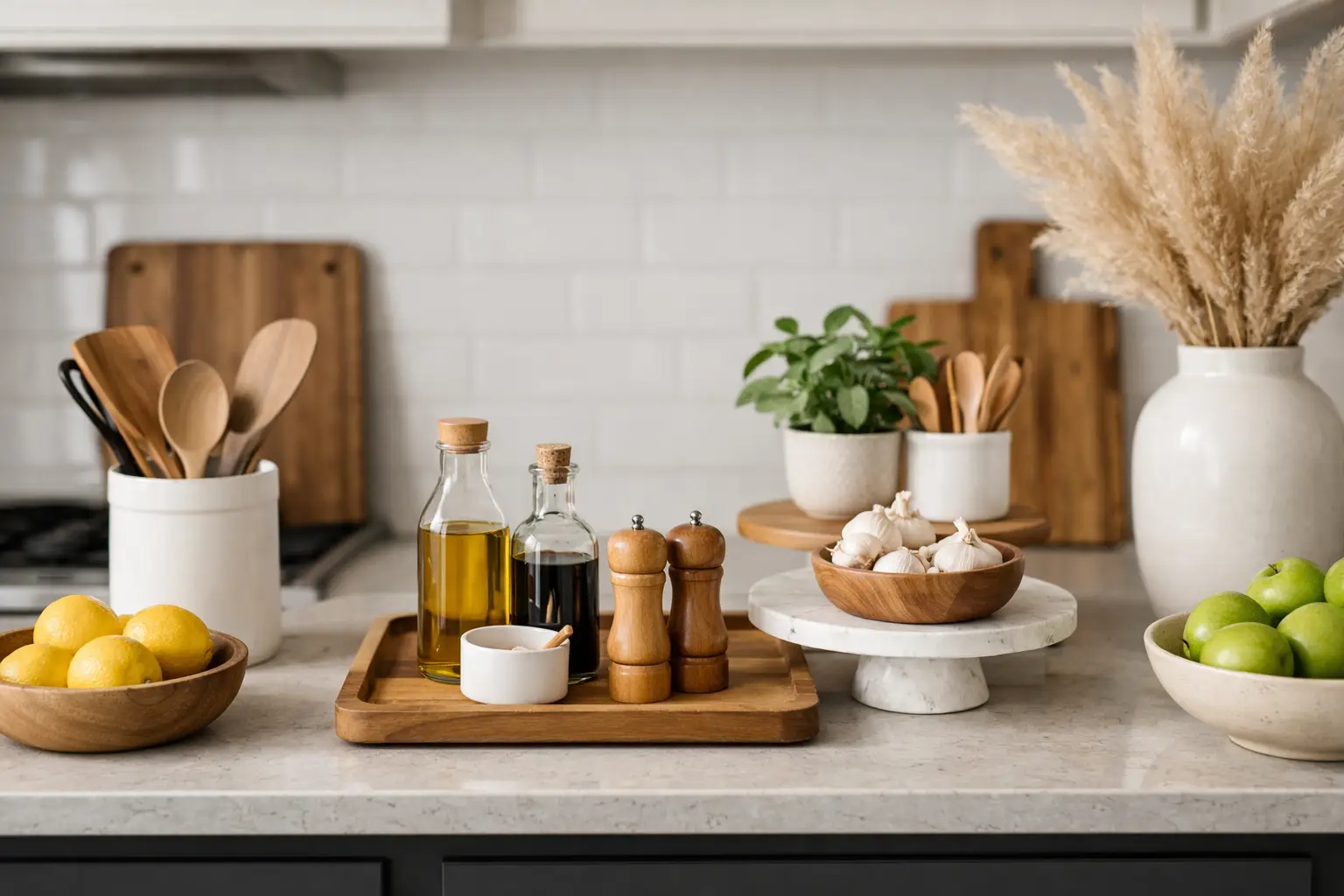
If mornings begin with coffee, keep the coffee maker, favorite mugs, beans or pods, and a small tray together. A tray is a simple design upgrade because it turns several loose objects into one composed vignette. Choose a finish that complements your kitchen, such as warm wood, sleek metal, or textured stoneware.
Keep this station close to an outlet and near the refrigerator if you regularly reach for milk or cream. If counter space is tight, limit the display to the machine and a canister, storing extra mugs and supplies in a nearby cabinet. Convenience matters, but a crowded coffee corner can quickly lose its relaxed, café-inspired feel.
Give prep tools a proper home
The area nearest your primary cutting surface should hold the tools you reach for during meal prep: cooking utensils, a cutting board, salt, pepper, and perhaps a small crock of wooden spoons. A quality utensil holder can look intentionally decorative while keeping drawers from becoming a daily frustration.
Avoid filling this zone with every gadget. Keep only the tools you use several times a week. Specialty peelers, extra spatulas, and rarely used measuring equipment are better stored in drawers, where they remain easy to access without competing for visual attention.
Make the sink area practical and discreet
A sink zone needs a few essentials, but they do not need to look utilitarian. Decant dish soap into a reusable dispenser, choose a coordinated brush, and use a compact caddy or tray to prevent wet items from spreading across the counter. A small absorbent mat can work well if it is washed regularly and fits the scale of the sink.
This is one area where function should win over minimalism. If you cook often, keeping soap and a scrub brush within reach is sensible. The goal is not to hide every useful item. It is to contain it beautifully.
Prioritize Vertical Storage Over Counter Sprawl
When counters feel cramped, look up. Vertical storage creates breathing room without sacrificing access to the pieces you use most. A slim wall-mounted rail, an elevated shelf, or a compact riser can turn unused height into storage for spices, oils, or small canisters.
Tiered organizers are particularly useful for corners, which often become awkward drop zones. Use one to display a few attractive essentials, such as oils and seasonings, instead of allowing a loose collection of bottles to gather there. Keep labels facing forward and wipe containers often. Even an elegant organizer looks cluttered when it is overloaded or sticky.
Open shelving can be striking, but it is not the right choice for every household. It works best for people who enjoy maintaining a curated look and do not mind occasional dusting. Closed cabinetry is often the more practical choice for busy families, frequent cooks, or anyone who prefers low-maintenance order.
Choose Countertop Pieces That Earn Their Display
A counter should not become storage for disposable packaging, duplicate appliances, or random promotional mugs. But it can be the ideal setting for a few elevated pieces that make daily life more enjoyable.
Think in terms of useful decor. A statement bowl filled with fresh fruit adds color and encourages easy snacking. A handsome bread box keeps loaves fresh while reducing visual noise. A premium knife block, elegant electric kettle, or compact countertop organizer can bring a sense of sophistication to a hardworking space.
Scale is essential. One substantial object often looks more intentional than six small objects scattered around the room. If your kitchen already has bold lighting, veined stone, or richly colored cabinetry, choose quieter accessories. If the room is more minimal, a textured tray or sculptural vessel can provide a welcome focal point.
Put Small Items on Trays, Not Directly on the Counter
The quickest way to make a counter appear orderly is to corral small items. Trays work beautifully for oils near the stove, coffee supplies near the brewer, or vitamins and water bottles in a morning routine zone. They also make cleaning easier because you can lift one grouped arrangement instead of moving individual pieces.
Choose trays with a defined edge and enough surface area for the items they hold. A tray that is too small looks accidental; one that is too large consumes valuable workspace. Leave a little open space inside it so the arrangement feels composed rather than packed.
This is also a smart place to introduce contrast. A black metal tray can sharpen a light kitchen, while a natural wood tray softens marble, quartz, or glossy finishes. These small material choices help a functional kitchen feel more considered.
Rethink Appliances Before They Take Over
Appliances are often the biggest source of countertop clutter because they are bulky and easy to leave out. Keep out the items you use daily, such as a coffee maker, toaster, or blender if it truly gets regular use. Store appliances used weekly or less in a cabinet, pantry, or dedicated shelf.
Be realistic about your habits. A stand mixer may deserve a permanent place if you bake every weekend, especially if it is a design-forward piece you enjoy seeing. If it comes out only for holiday cookies, reclaim that counter space. The same rule applies to air fryers, slow cookers, juicers, and specialty beverage machines.
For heavy appliances, accessibility matters more than strict minimalism. A lower cabinet with a pull-out shelf may be a better solution than lifting a bulky machine down from a high shelf. An organized kitchen should make cooking easier, not turn every meal into a storage puzzle.
Protect a Clear Prep Surface
Every kitchen needs one dependable stretch of open counter for chopping, mixing, setting down groceries, or serving a meal. Even a small kitchen benefits from a clear zone near the sink or cooktop. Treat this surface as protected space rather than a place to park items temporarily.
If papers and keys regularly end up there, the issue may not be a lack of discipline. It may mean your home needs a better landing spot near the entry or a dedicated drawer for household paperwork. Solve the source of the clutter instead of repeatedly moving it from one corner of the counter to another.
A clear prep area also gives your kitchen a more expansive, high-end appearance. Beautiful materials, from natural stone to butcher block, deserve room to be seen.
Keep Counters Organized With a Five-Minute Reset
Counter organization is maintained through small habits, not a major weekend overhaul. At the end of the day, return dishes to the dishwasher, wipe down the coffee station, put mail away, and reset any items that migrated from their zones. Five focused minutes can preserve the calm you worked to create.
Once a week, check fruit bowls, wipe trays, refill canisters, and move any rarely used items back into storage. This light routine keeps the kitchen feeling ready for guests, weeknight dinners, and slow weekend mornings alike.
Your counters do not need to be empty to look exceptional. They simply need to reflect your life with a little more intention: fewer distractions, better-looking essentials, and enough open space to enjoy the kitchen you have created.








Leave a comment