What Makes Furniture Look Expensive at Home?
A sofa can cost more than a monthly mortgage payment and still look underwhelming in the wrong room. Meanwhile, a thoughtfully chosen accent chair, properly scaled coffee table, and warm lamp can make an affordable space feel collected and high-end. What makes furniture look expensive is rarely one flashy detail. It is the combination of proportion, material presence, visual restraint, and the way every piece relates to the room around it.
For a polished home, the goal is not to imitate a showroom filled with untouchable luxury. It is to choose pieces that feel intentional, comfortable, and designed to last beyond one passing trend.
What Makes Furniture Look Expensive? It Starts With Proportion
Expensive-looking rooms tend to feel calm because the furniture fits. A too-small sofa floating in a large living room, a narrow coffee table beside an oversized sectional, or tiny nightstands next to a substantial bed can make even beautiful pieces seem temporary.
Start with the room’s largest item, usually the sofa, bed, or dining table. It should have enough visual weight to anchor the space without swallowing it. In a living room, a coffee table generally looks best when it is about two-thirds the length of the sofa and leaves comfortable walking clearance on every side. In a bedroom, nightstands should feel close to mattress height and wide enough to be useful, not like an afterthought.
Scale is also about height. A low-profile sofa paired with a tall floor lamp, generous artwork, or a sculptural plant creates pleasing contrast. When every item sits at the same level, the room can look flat. Layering heights gives furniture a more architectural, custom feel.
Choose Materials With Presence
Material quality is visible before anyone touches it. Solid wood or well-finished wood veneer, stone, metal, substantial glass, leather, and textured upholstery tend to read as premium because they have depth, variation, and weight.
That does not mean every piece needs to be solid oak or natural marble. Those materials can be expensive, heavy, and impractical for homes with children, pets, or frequent moves. The smarter approach is to prioritize convincing finishes and tactile surfaces where they matter most. A walnut-toned dining table with a convincing grain pattern, for example, often has more impact than a room full of thin, glossy furniture.
Look closely at the details: rounded or finished edges, a matte rather than plasticky sheen, consistent color, and hardware that feels substantial. Upholstery should have texture or structure, whether that is a tailored performance fabric, bouclé-inspired weave, linen-look blend, or rich velvet. Smooth, overly shiny synthetic fabrics can make a piece feel less refined, especially under bright overhead lighting.
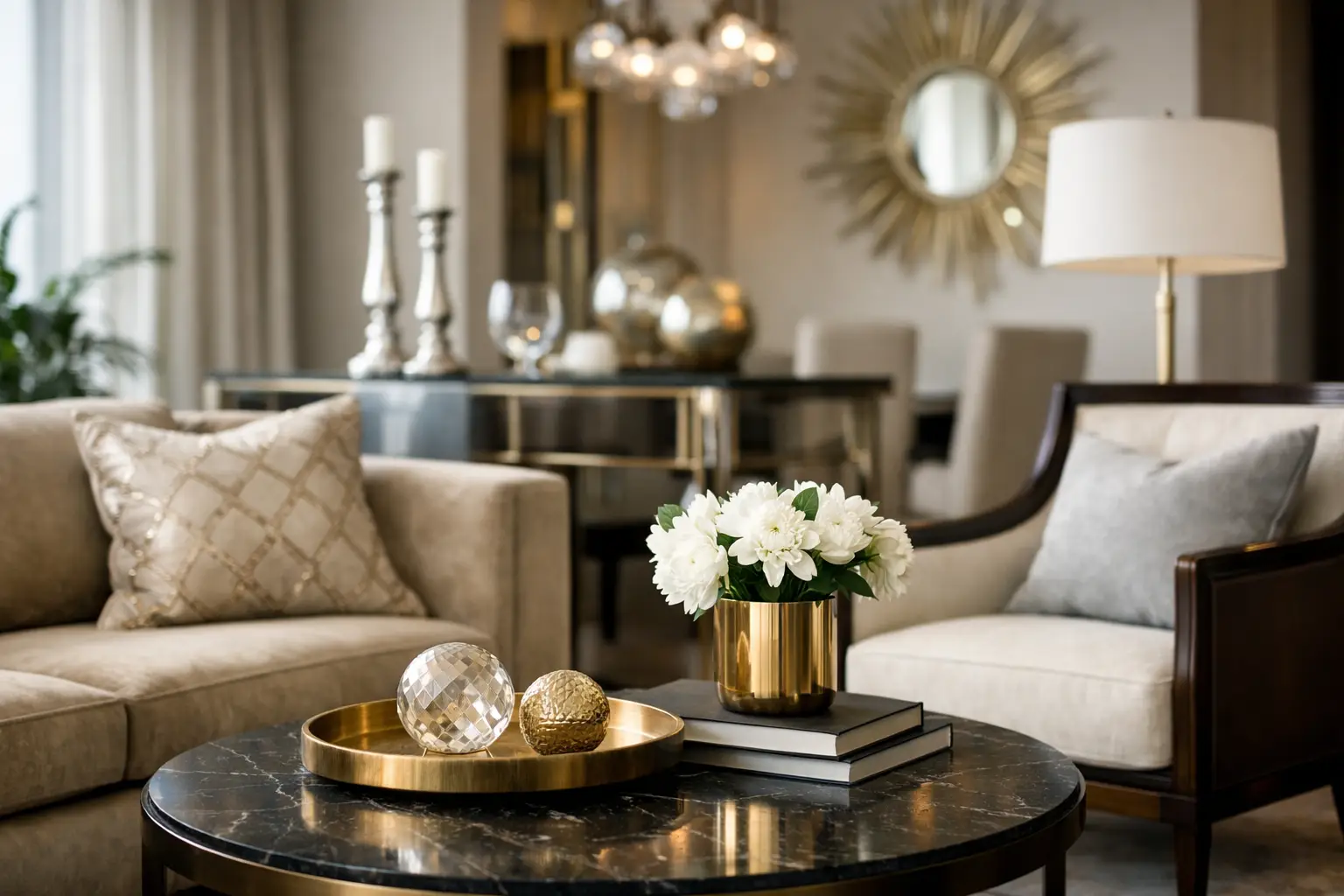
A limited material palette also helps. Pair warm wood with black metal and a soft neutral fabric, or combine cream upholstery with aged brass and pale stone. Repeating two or three finishes across a room makes it feel designed rather than assembled piece by piece.
Silhouettes Matter More Than Ornate Details
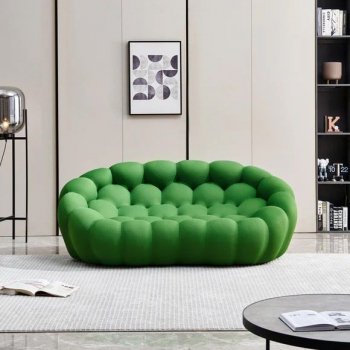
Luxury furniture is not always decorative. Often, it is striking because its shape is clean, balanced, and deliberate. Consider a curved accent chair, a low rounded coffee table, a fluted console, or dining chairs with a graceful frame. These silhouettes create an immediate focal point without demanding excessive ornament.
Avoid choosing every item with a dramatic shape. One statement piece carries more authority when it is surrounded by quieter forms. A sculptural chair can look exceptional beside a simple sofa. A bold marble-look table feels elevated when the surrounding seating has clean lines.
The same principle applies to legs and bases. Furniture that appears to sit thoughtfully on the floor or float slightly above it usually looks more polished than pieces with thin, awkward legs or bulky, undefined bases. A plinth base, tapered wood legs, or an upholstered bench with a tailored skirt can all add a sense of design intention.
Invest Where the Eye Lands First
Not every furnishing needs the same budget. The most effective way to create a premium look is to prioritize the pieces people notice at first glance: seating, a dining table, a bed frame, lighting, and one standout storage piece such as a console or credenza.
In a living room, the sofa sets the tone. Look for generous cushions, a tailored profile, and upholstery that complements the room’s color story. In a bedroom, an upholstered headboard or a substantial wood frame gives the entire space a more finished appearance. A simple bed can feel dramatically more expensive once it is paired with oversized pillows, a textured throw, and properly scaled bedside tables.
Save on items that play a supporting role, such as side tables, occasional stools, or decorative shelving. These pieces can still look refined when their finish relates to the larger furniture. The room reads as high-end when the overall composition is cohesive, not when every item carries the highest price tag.
Use Color With Restraint, Not Fear
Neutral rooms are popular because warm whites, taupes, mushroom tones, charcoal, soft black, and natural wood create an easy sense of continuity. But expensive-looking does not have to mean colorless. Deep olive, ink blue, rust, oxblood, and muted terracotta can feel especially sophisticated when used with intention.
The key is to avoid competing colors and disconnected undertones. A cool gray sofa beside orange-toned wood and bright white accessories can feel accidental. Instead, choose a dominant base, then add depth through two or three supporting tones. A creamy room might include caramel leather, black accents, and olive textiles. A navy sofa can be grounded by warm wood, ivory pillows, and antique brass lighting.
Dark furniture can look exceptionally premium, but it needs contrast. A black dining table against black floors may disappear, while the same table on a light rug or beneath a warm pendant becomes a clear focal point. Let each major piece have enough breathing room to be seen.
Lighting Is Furniture’s Best Styling Partner
Even an excellent room loses its appeal under harsh, cool overhead light. Layered lighting makes materials look richer, adds dimension to upholstery, and creates the inviting atmosphere people associate with upscale interiors.
Use a central fixture for overall illumination, then add table lamps, floor lamps, or wall-mounted lighting where people sit, read, dine, or relax. Warm bulbs usually flatter wood, fabric, and skin tones better than stark blue-white light. A well-placed lamp beside a sofa also makes the seating area feel purposeful, which is a subtle but powerful sign of a finished room.
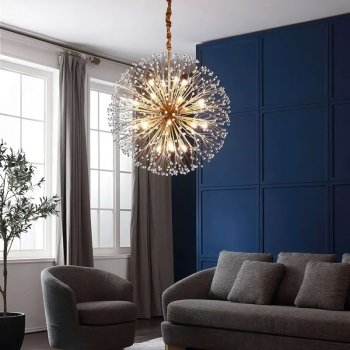
Choose fixtures with visual substance. A pleated shade, opal glass globe, ribbed ceramic base, or slim metal arc can bring the same design value as a small piece of furniture. Lighting is particularly useful when upgrading a room on a controlled budget because it changes how every other surface is perceived.
Style the Space So It Feels Collected
A premium home rarely looks crowded, but it does not look empty either. The difference is editing. Give each furniture piece room to breathe, and choose accessories with varying heights, textures, and finishes. A coffee table might hold a stack of art books, a low tray, and one sculptural object. A console can be styled with a lamp, a framed print, and a small bowl rather than a row of unrelated décor.
Curtains are another major signal of quality. Hang panels high and wide around the window, with fabric that reaches close to the floor. This makes ceilings feel taller and windows more generous. A large area rug can perform a similar transformation by connecting the furniture into one defined, intentional arrangement.
Avoid matching every item too perfectly. A coordinated set can be convenient, but a room often feels more luxurious when wood tones, textiles, and eras are gently mixed. The common thread should be color, scale, or material, not identical design.
Make Function Part of the Luxury
True sophistication is comfortable to live with. Choose storage that reduces visual clutter, tables with durable surfaces, and seating that supports everyday use. If a delicate white sofa will make you nervous every time a guest brings coffee into the room, it may not be the right luxury for your lifestyle.
Performance fabric, easy-clean finishes, rounded corners, and flexible accent seating can be elegant choices, not compromises. At Market Maestros, the most compelling furniture finds balance statement-making design with the practical comfort a real home needs.
The final touch is patience. Build your room around pieces you genuinely enjoy, allow a little open space, and edit anything that does not support the look. A home feels expensive when it feels considered – and when every item earns its place.








Leave a comment