Luxury Inspired Entryway Decor That Looks Custom
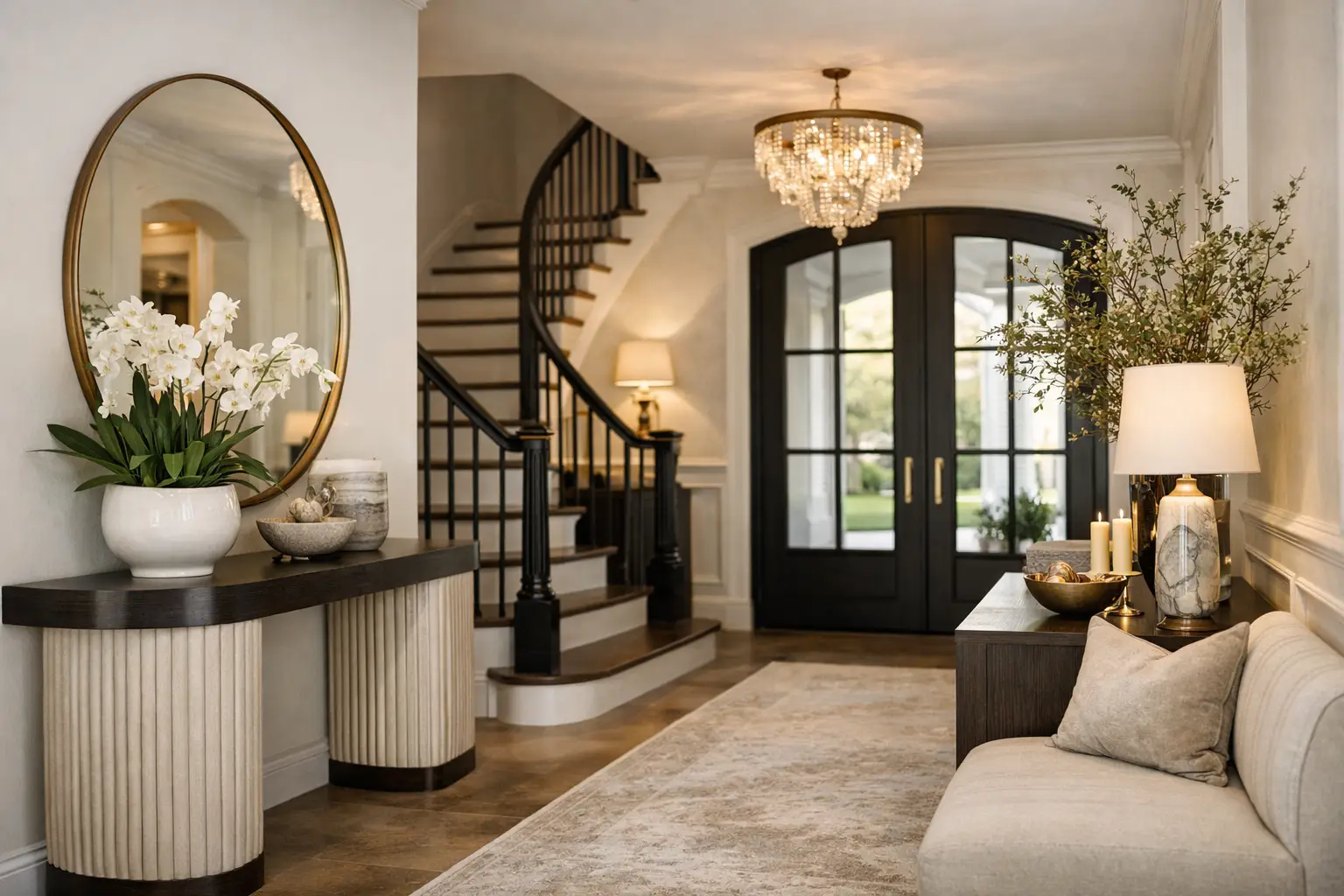
The best luxury inspired entryway decor does not announce itself with a crowded console or an expensive-looking pile of accessories. It creates an immediate feeling instead: the light is warm, the surfaces are intentional, and there is a graceful place for the practical pieces of real life. Keys, shoes, bags, mail, and umbrellas still need somewhere to go. The difference is that they no longer take over the first view of your home.
An entryway has a demanding job. It welcomes guests, sets the tone for the rooms beyond it, and handles the daily rhythm of leaving and returning. A polished design should feel elevated without becoming too precious to use. That balance is where a few well-chosen pieces can make an ordinary threshold look thoughtfully furnished.
Start With One Statement Piece
Luxury interiors often feel composed because the eye has a clear place to land. In an entryway, that focal point may be a sculptural mirror, a bold pendant light, a tailored bench, or a slim console with an expressive silhouette. Choose one element to carry the visual weight, then allow everything around it to support that choice.
A large arched mirror is especially effective in narrow spaces. It reflects light, gives guests a last look before heading out, and adds architectural softness to walls that might otherwise feel flat. If your home leans modern, look for a clean black, brass, or brushed-metal frame. For a warmer look, choose natural wood, aged gold, or a frame with subtle texture.
The scale matters more than people expect. A mirror or artwork that is too small can make a console look disconnected, while a generously sized piece creates the confident, custom feel associated with higher-end spaces. Leave enough breathing room around it so the wall does not feel overfilled.
Build Luxury Inspired Entryway Decor in Layers
A refined entryway is rarely made from one purchase. It comes together through layers of material, height, and purpose. Begin with the anchor piece, then add lighting, a soft surface underfoot, and a few decorative details that bring personality to the arrangement.
Lighting is one of the fastest ways to change the mood. A pair of small table lamps on a wider console can look classic and collected, while a single lamp with a ceramic, stone-look, glass, or metallic base adds a boutique-hotel glow. If there is overhead wiring, a statement flush mount or pendant can make the entire entrance feel more considered. Aim for warm bulbs rather than bright white light, especially in the evening, when an inviting first impression matters most.
Underfoot, a runner or rug gives the space visual grounding. Choose a durable low-pile style for high traffic, especially if children, pets, or wet weather are part of your household routine. A muted pattern can conceal everyday marks while still giving the room a layered, designer finish. Solid rugs feel more minimal and modern, but they tend to show wear faster. The right choice depends on whether your priority is a crisp gallery-like look or easy everyday maintenance.
Texture does much of the work in luxury-inspired rooms. Consider the contrast between a sleek mirror and a ribbed ceramic vase, a dark wood console and a soft woven runner, or a polished tray placed on a matte stone-look surface. You do not need every item to match. A mix of finishes feels richer when there is a shared color story.
Make Function Look Intentional
The entryway is not the place to pretend clutter does not exist. It is the place to give clutter a discreet home. A small tray for keys and sunglasses, a lidded box for loose essentials, and a basket for dog leashes or seasonal accessories can create order without making the room feel like a storage zone.
A console table works beautifully in a larger foyer, but it is not the only solution. In a compact apartment or hallway, consider a floating shelf with a catchall tray beneath a mirror. A narrow shoe cabinet can provide much-needed organization while keeping the visual profile clean. If you have room for seating, an upholstered bench gives the space both comfort and presence. It also makes putting on shoes feel less rushed, which is a small luxury worth having.
Choose storage that looks like furniture, not an afterthought. Fluted doors, curved edges, warm wood tones, mixed materials, and elevated legs can make practical pieces feel more premium. Open baskets are useful, but use them sparingly. Too many visible containers can make an entryway read as busy rather than curated.
Use a Controlled Palette
A luxury look is often less about using only neutral colors and more about using color with restraint. Choose two or three foundational shades, then repeat them through the major pieces. For example, a warm white wall, walnut console, and antique-brass accents feel timeless. Charcoal, oak, and cream deliver a more contemporary mood. Deep green, black, and gold can be dramatic, though this combination benefits from strong natural or layered lighting.
If you want to introduce a bolder color, do it through a runner, artwork, or an accent chair rather than every accessory. Rich tones such as olive, navy, oxblood, and terracotta can make an entrance feel memorable, but too many competing colors quickly dilute the effect.
For decorative objects, use the rule of visual variation rather than buying sets. A low stack of design books, a taller vase with branches, and a small sculptural object offer different heights and shapes. Keep the arrangement edited. A console does not need to display every favorite item. One beautiful bowl, a framed photograph, and greenery can have more impact than a dozen small pieces.
Add Greenery With a Designer’s Eye
Fresh branches, a potted plant, or realistic faux greenery can bring life to an entryway that otherwise leans hard into wood, metal, and stone. The vessel matters as much as what goes in it. A substantial ceramic vase or textured planter looks more elevated than a lightweight container with an overly busy pattern.
Tall branches work well beside a console or bench because they draw the eye upward. On a tabletop, keep greenery low enough that it does not block a mirror or overwhelm the surface. If your entry gets limited daylight, high-quality faux stems are the more reliable choice. A faded live plant does not communicate luxury, no matter how beautiful the planter is.
Know Where to Spend and Where to Save
Creating an expensive-looking entryway does not require premium pricing on every item. Spend where the piece affects the room’s silhouette or gets daily use: lighting, a mirror, seating, a console, or a durable rug. Save on smaller accents that can be changed with the season, such as trays, decorative objects, faux stems, and framed art.
This approach also keeps the space flexible. If your taste shifts from warm organic modern to tailored contemporary, swapping a few details is far easier than replacing the largest furniture pieces. A neutral foundation lets you refresh the entry without starting over.
When shopping online, check dimensions before falling for the photograph. Measure wall width, clearance around the front door, and the walkway needed for daily traffic. A beautiful bench that forces everyone to squeeze past it will not feel luxurious for long. Look for finish descriptions, close-up images, and materials that suit how your household actually lives. Elevated style should make your routine easier, not add another thing to maintain.
Give the Space a Personal Finish
The most convincing luxury-inspired spaces avoid looking staged. A framed black-and-white family photo, a small piece of art collected on a trip, or a favorite coffee-table book can make the design feel personal without losing polish. The goal is not to copy a showroom. It is to create an entrance that feels distinctly yours, with enough order and beauty to make arriving home feel like an occasion.
At Market Maestros, the strongest entryway upgrades pair standout design with practical value, so you can choose pieces that look considered, work hard, and support the way your home welcomes people every day.








Leave a comment