Modern vs Classic Table Lamps for Your Home
A table lamp can change the character of a room long after the larger furniture is in place. It directs the eye, softens the light, and gives a bedside table, console, or reading corner a finished, intentional look. When comparing modern vs classic table lamps, the best choice is rarely about following a rule. It is about choosing a piece that makes your space feel more considered while delivering the light you actually need.
A sculptural modern lamp can give a familiar room a gallery-inspired edge. A classic lamp can add warmth, symmetry, and a sense of permanence to a newer setting. Both can look elevated. The difference lies in their lines, materials, proportions, and the mood they create once the sun goes down.
Modern vs Classic Table Lamps: The Defining Look
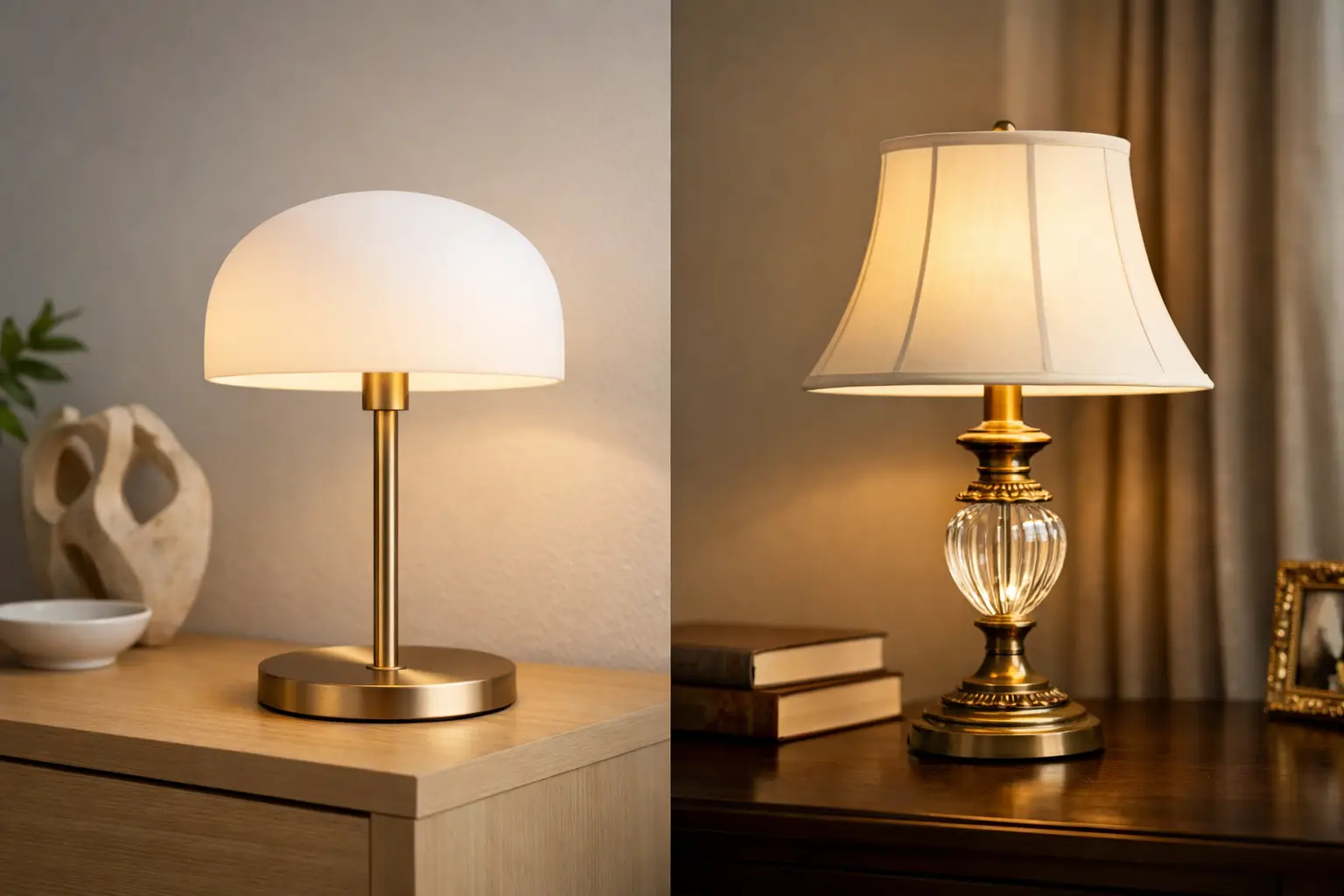
Modern table lamps favor clarity. Think clean silhouettes, geometric bases, slim metal stems, smoked glass, sculptural ceramic, and quiet color palettes. Their appeal comes from restraint and proportion rather than ornament. A matte black lamp with an ivory linen shade, for example, can make a bedroom feel polished without competing with artwork, bedding, or a statement headboard.
Classic table lamps are more rooted in decorative tradition. They often feature turned wood, fluted ceramic, brass finishes, crystal details, pleated shades, or elegant urn-shaped bases. These designs bring visual softness and familiarity, particularly in rooms with wood furniture, tailored upholstery, traditional patterns, or layered textiles.
Neither category has to be rigid. A lamp with a timeless linen shade and a clean marble base can work across styles. Likewise, a vintage-inspired brass lamp with an uncomplicated silhouette can feel at home beside contemporary furniture. The most successful rooms often mix eras rather than committing to one look from corner to corner.
Choose by the Feeling You Want to Create
Start with the atmosphere, not just the lamp base. Modern lighting tends to make a room feel edited, fresh, and intentionally current. It is an excellent choice for apartments, streamlined bedrooms, minimalist desks, and living rooms where the furniture already has strong shapes. If your goal is a refined space with less visual clutter, modern designs offer a reliable path.
Classic lighting creates a more collected feeling. It can make a new home feel settled or add richness to a room with neutral walls and simple furniture. A substantial ceramic lamp in a warm neutral tone can bring depth to a living room that might otherwise feel flat. Traditional forms are especially effective when you want a room to feel welcoming rather than overly styled.
There is also a useful middle ground: transitional style. If your home includes a modern sofa, vintage art, natural wood accents, or traditional millwork, a transitional lamp may be the smartest investment. Look for familiar materials such as brass, linen, marble, or ceramic in simplified shapes. The result feels sophisticated without appearing locked into a single decorating era.
Consider Scale Before Style
A beautiful lamp can still look wrong if its scale is off. This is where many rooms lose the premium, balanced appearance shoppers are after. Before selecting a modern or classic design, measure the table and think about the surrounding furniture.
On a bedside table, the lamp should feel substantial enough to anchor the bed without crowding your nighttime essentials. In many bedrooms, the bottom of the lampshade should sit roughly at shoulder height when you are sitting up in bed. That placement helps direct the light comfortably for reading while preventing glare.
For a living room side table, the lampshade should generally be in proportion with the tabletop. A tiny lamp next to a deep, oversized sofa can disappear. Conversely, a wide shade on a narrow drink table may feel top-heavy and impractical. A tall, slender modern lamp can bring height to a low-profile sectional, while a fuller classic lamp can balance a more traditional armchair or substantial wood end table.
Pay attention to shade width as well. A shade that is noticeably wider than the base often creates a more traditional, generous silhouette. A shade that closely follows the width of the base reads cleaner and more contemporary. There are exceptions, but these visual cues help when comparing designs online.
Materials Set the Tone
Material is one of the quickest ways to decide whether a lamp belongs in your room. Modern lamps often use metal, concrete, stone, acrylic, ribbed glass, and high-gloss ceramic. These finishes can feel architectural and crisp, particularly in black, white, chrome, bronze, or muted earth tones.
Classic lamps frequently lean into polished brass, antique bronze, carved wood, porcelain, crystal, and patterned ceramic. These materials bring detail and a little more visual history. They also pair beautifully with velvet, woven rugs, framed artwork, and rich wood finishes.
For a luxury-inspired look at an accessible price, focus less on whether a material is flashy and more on whether the finish looks intentional. A weighty-looking base, a neatly tailored shade, and a finish that complements your existing hardware will typically look more expensive than a lamp with excessive ornament. The details that matter are tactile: a smooth ceramic glaze, a convincing stone effect, a well-shaped finial, or a fabric shade that diffuses light rather than exposing the bulb.
Light Quality Matters as Much as Appearance
Table lamps are decorative, but they are also part of your daily routine. The right bulb and shade can make a home feel relaxed and inviting; the wrong combination can make even an exquisite lamp feel harsh.
For bedrooms, living rooms, and quiet reading spaces, warm white bulbs are usually the most flattering choice. A color temperature around 2700K creates a soft, comfortable glow that works well with both modern and classic interiors. If you use a lamp for reading, choose a higher lumen output or a bulb designed for focused task lighting, then soften the effect with a fabric or frosted-glass shade.
Modern lamps sometimes feature exposed bulbs, clear glass, or directional shades. These can look striking, but they need thoughtful placement. They work best where the bulb will not shine directly into someone’s eyes, such as on a console table or behind a seating area. Classic lamps with opaque fabric shades tend to distribute light more gently, making them an easy choice for bedside tables and lounge spaces.
Dimmable bulbs are worth considering when a lamp serves more than one purpose. Bright light helps with work, reading, or getting ready for the day; lower light turns the same room into a calmer evening setting. This small upgrade gives any lamp a more versatile, high-end feel.
Where Each Style Works Best
Modern table lamps shine in spaces that benefit from contrast or clean definition. Place one on a streamlined entryway console to make a first impression, beside a contemporary bed for a boutique-hotel look, or on a home-office desk where visual clutter needs to stay low. A pair of matching modern lamps also works beautifully when you want a polished, symmetrical living room without making it feel formal.
Classic lamps are especially compelling in bedrooms, reading rooms, formal living areas, and welcoming entryways. They add softness next to upholstered furniture and provide an elegant counterpoint to newer pieces. A traditional lamp can also be the element that prevents an all-neutral room from looking generic.
Do not assume matching lamps are always required. Matching creates order and is ideal for nightstands or paired end tables. Mixing lamps can look more curated in a living room or on a console, as long as there is a connecting detail such as a shared shade color, similar height, or complementary metal finish.
A Smart Way to Mix Modern and Classic Lighting
If your room already has a clear style, choose a lamp that either reinforces it or introduces one deliberate contrast. A classic lamp in a highly modern room can add character, especially if its color echoes other elements in the space. A modern lamp in a traditional room can make the overall look feel refreshed rather than overly formal.
Keep the contrast focused. If you choose an ornate classic lamp, pair it with a simple shade and a clean tabletop. If you choose a bold, sculptural modern lamp, let nearby accessories stay quiet. This approach makes the lamp feel like an exclusive find rather than one more object competing for attention.
At Market Maestros, the strongest lighting choices are the ones that deliver both visual impact and everyday comfort. Prioritize a style that supports how you live, whether that means a statement piece for the entryway or a warm bedside glow that makes winding down feel more luxurious.
The right lamp should earn its place twice: once when the room is bright and its silhouette catches your eye, and again at night when its light makes home feel exactly where you want to be.








Leave a comment